2026-09-29 ·
Hydro Jetting vs Snaking: When Tempe Homeowners Need High-Pressure Jetting
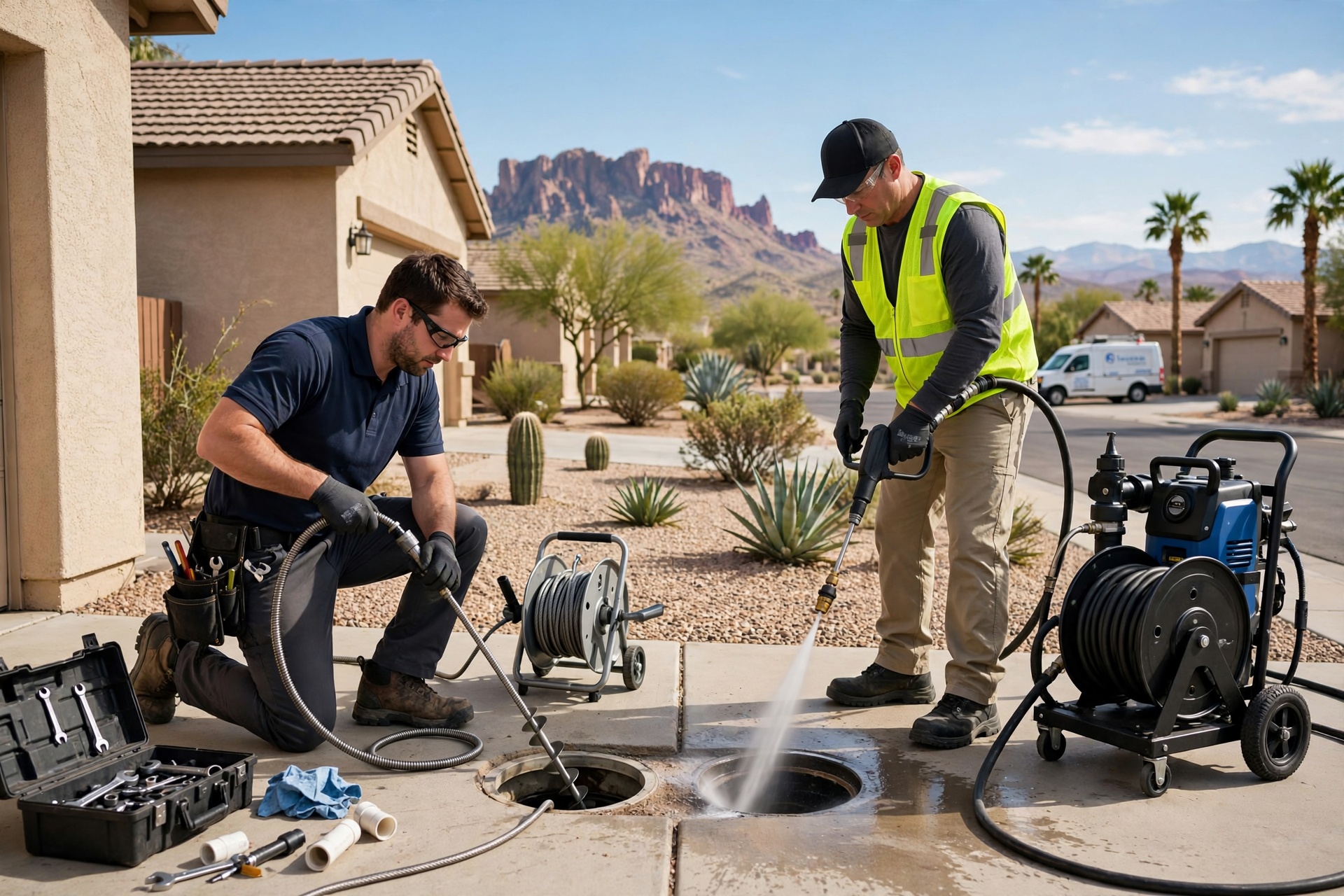
Tempe homeowners need high-pressure jetting rather than snaking when grease, mineral scale, or roots have coated pipe walls so thoroughly that a cable leaves residue behind and the line re-clogs within weeks. This holds true for many properties in South Tempe and around Arizona State University where cast iron or clay lines installed decades ago now face constant mineral loading from the region's hard water.
When Snaking Alone Cannot Clear Tempe Lines
Snaking reaches blockages quickly but only punches a hole through them. In Tempe's hot desert climate, dissolved minerals precipitate out faster during mild winters when evaporation rates stay high, leaving scale layers that a cable simply slides past. Homeowners near Papago Park or Downtown Tempe often see slow drains return days after snaking because the remaining coating narrows the pipe again. A camera inspection before choosing the method reveals whether the pipe walls still carry heavy buildup that requires the scouring action of jetting at 3,500–4,000 psi. Without that step, repeated service calls become common in Maricopa County homes where soil movement from temperature swings stresses older joints.
Desert Hard Water and Grease Buildup Patterns
Tempe's water carries enough calcium and magnesium to create stubborn scale inside sewer lines serving homes from Chandler to Mesa. Combined with cooking grease common in residential kitchens near Mill Avenue, the deposits harden into a cement-like layer that snaking cannot scrape away. Properties in South Tempe with longer lateral runs see this problem accelerate because slower flow allows more settling time. Jetting restores full diameter by blasting the walls clean, while snaking leaves the coating intact. Residents who notice recurring backups after using drain cleaners benefit from switching to jetting once a camera confirms the scale thickness.
Tree Roots and Soil Conditions in Local Neighborhoods
South Tempe and areas bordering Papago Park sit on soil that shifts with seasonal temperature changes, opening small gaps in older clay or concrete pipes. Tree roots from neighborhood landscaping then enter those gaps and form dense mats that a cable can cut but rarely removes completely. Jetting at high pressure severs roots and flushes the fragments out in one pass. Homeowners near Tempe Town Lake report fewer callbacks after jetting because the method clears both the root mass and the fine sediment that follows water infiltration. Snaking often leaves root fragments that regrow within one growing season in Maricopa County's mild winters.
Choosing the Right Approach for Your Property
A Sewer Camera Inspection first identifies whether scale, grease, or roots dominate the line. When the footage shows wall coating thicker than one-quarter inch or multiple root intrusions, Residential Hydro Jetting becomes the practical next step. Properties in Central Tempe with cast iron laterals installed before 1980 frequently reach this threshold. After jetting, many owners schedule annual maintenance during the cooler months to prevent rapid re-accumulation driven by the desert climate. This sequence reduces emergency calls compared with repeated snaking attempts that never address the full pipe interior.
Practical Steps After Identifying the Need for Jetting
Schedule the service during daylight hours when crews can access cleanouts without disrupting neighbors in dense areas like Downtown Tempe. Request that the technician run a post-job camera pass to confirm the pipe walls are clear. Homeowners near Arizona State University often combine jetting with Tree Root Removal when footage shows ongoing root pressure from nearby landscaping. Keeping records of each service helps track how quickly scale returns in your specific water conditions. For additional guidance on hard-water effects, see the article on Clearing Slow Drains Caused by Desert Hard Water.